
So just what are these drinks? A quick look on Drank’s website, drankbeverage.com, and you’ll have a clear idea. On the left side of the page you’ll see the statement, “The first EXTREME RELAXATION dietary supplement to hit the market, DRANK is designed to help calm and relax you.” Also visible on the home page is “Drank TV”, which shows footage and video of media coverage the product has received, including one news clipping that reads “Drunk on Drank” as the header. Not exactly the type of publicity most would hope to promote on a business website. They even provide a faux warning label on each page of the site that says “WARNING! Drank may be extremely relaxing and calming.”
Visit Mary Jane’s Relaxation Soda website, which has a product name alone that generates some controversy and you’ll see similar claims of providing relaxation.
WHAT’S IN THE CAN?
One of the main ingredients in Drank is melatonin which has been used as a sleep aid. This hormone, however, is not approved by the US Food and Drug administration and is the reason Drank is considered a dietary supplement. Due to this fact, the purity, safety, and effectiveness of melatonin-containing products cannot be guaranteed and are not regulated by any government agency, rather, they are monitored by the manufacturers themselves. And some of the side-effects of melatonin use include sleepiness, headache, stomach discomfort, and depression. Sound like an ideal way to relax?
While Mary Jane’s Soda doesn’t contain melatonin it does contain kava root. This ingredient has been used ceremonially for centuries and is said to provide relaxing qualities. Unfortunately, kava root also has the potential for adverse side-effects like liver damage and many health experts suggest not taking the extract unless under close supervision by a physician.
Worst of all the adverse side effects in both drinks could be exacerbated in children, yet these products are available to anyone regardless of age.
THERE IS A BETTER WAY
Controversy and questionable ingredients aside, there are simply better ways to relax and even improve concentration than gulping down one of these products. Why not stick to methods that are known to work, like exercise, which studies have not only shown can improve concentration, memory, and provide a feeling of relaxation post workout, but can also burn calories and keep you fit too.
WHAT DO YOU THINK?
[NL] wants to know what you think about “anti-energy” drinks like Drank and Mary Jane’s Relaxation Soda. Have you tried them? Would you? Let us know by participating in our poll or by leaving a comment.

The Nonsense that is Sensa

One thing infomercials are good for is reminding us health professionals that not only are many of the products marketed to the public unsafe, many just plain don’t make sense. Last week, while watching a bit of late night television, I was introduced to the Sensa weight-loss system. Though it has been on the market for over a year now, recent news coverage about the product’s discrepancies as well as a class action lawsuit has brought the weight loss product back to a media forefront. It didn’t take much time through research on the product to discover that there is not much sense in Sensa.
ABOUT SENSA
“Sprinkle, Eat, Lose”. The infomercial caught my attention for the reason that it has probably caught the attention of thousands of other Americans. The simplicity of the product’s claims and catch phrases truly serve its appeal. I couldn’t draw my eyes away from the television screen as I watched in-shape actresses sprinkle “tastants” on to their pizza and fried foods and carelessly enjoy. In fact, the product boasts the ability to help users lose weight with “no food restriction” and “no change in lifestyle”. Sensa’s non-sense claim is that by sprinkling their “tastant” crystals on any food they you will eat less.
SCIENCE BEHIND SENSA?
A likely reason that many consumers buy into the product’s authenticity is because it has been created and backed by a physician, Dr. Alan R. Hirsch. The product’s website has attempted to additionally back up the claim by adding a “How it Works” section as well as a “Clinically Proven” section.
In an attempt to explain how the product works, Dr. Hirsch claims the product uses “Sensory Specific Satiety” to trigger the body’s “I feel full” signal. After scanning the product’s website, I noticed that the “How it works” section only includes a short paragraph. Apparently Sensa just wants you to take their word for it.
Chances are, if product users are losing weight with use of this product it is due to a placebo effect of the product. Whether or not the product does what it claims to do, some users may believe it works and therefore consciously believe that they’re fuller, faster. And in reality, this is what science has been suggesting we do for years. Conscious eating, as well as eating slower, have both been linked to decreased energy intake as well as feeling full quicker. Take time to eat and enjoy your meal by focusing on your food’s sight, taste, and aroma and you’ll likely eat less in the long run.
A BETTER WAY TO CURB YOUR CRAVINGS
It is no secret that the American public is always open to the latest “quick fix” that will help them to decrease food intake and thus lose weight. Though as nutrition experts we stress that there are no quick and dirty solutions to weight loss or hunger cravings, there are some all natural solutions that have showed promising results.
Fill up on fiber. Dietary fiber has several functions in the body but one of my favorite perks of a high fiber diet is longer satiety and energy intake regulation. In other words, fiber helps us to stay fuller, longer and so we ultimately eat less calories. Fiber is found in fruits and vegetables like apples, prunes, and spinach as well as in whole grain products like bread, cereals, and whole-wheat pasta.
Step up your water game. Drinking more water is also a great way to help lower calorie intake. Studies show that drinking water before a meal can help decrease overall energy intake of the meal. Aim to drink an 8 ounce glass of water before you eat a meal as well as plenty of water through the day during non-meal times.
Pack in the protein. Another easy way to feel fuller longer is to include a protein with each meal and snack. A study published in the Journal of Physiology and Behavior showed a significant energy intake reduction with what they call “protein-induced satiety”. You’ll get healthy proteins in a meal with the addition of lean meats, fish, as well as beans/lentils. An example of a healthy addition of protein to a snack is adding a tablespoon of natural peanut butter or hummus to an apple or slice of whole wheat bread.
BOTTOM LINE
The truth is, if and when there is ever a safe and health “magic bullet” or “quick fix” to weight loss, health professionals will probably jump at the chance to promote its use. Until then, I offer my own humble simplistic phrase which coincides with what dietitians and health professionals have been rightly recommending for years; “Exercise, Eat Right, Lose”.

References
- Burton-Freeman B. Dietary fiber and energy regulation. Journal of Nutrition 2000; 130(2S Suppl.): 272S–5S
- “Water consumption reduces energy intake at a break… [J Am Diet Assoc. 2008] – PubMed result.” National Center for Biotechnology Information. N.p., n.d. Web. 3 May 2011. <http://www.ncbi.nlm.nih.gov/pu
- “ScienceDirect – Physiology & Behavior : Protein-induced satiety: Effects and mechanisms of different proteins.” ScienceDirect – Home . N.p., n.d. Web. 3 May 2011. <http://www.sciencedirect.com/science?_ob=ArticleURL&_udi=B6T0P-4RJYV80-2&_user=10&_coverDate=05%2F
Last month, [NL] introduced Nutrition Lately Limelight. This monthly featured post highlights the wonderful work being done by RDs, dietetic interns, students and volunteers. Our first RD to be honored was Ms. Robin Plotkin. In case you missed the post, you can read it below.
Tomorrow, we’ll be donning a new person in the limelight for the month of May: the wonderful Kat Lynch from Eating the Week. To find out more about her be sure to visit the [NL] Limelight tab at the top righthand side of the page May 1-31.
 ABOUT ROBIN
Robin Plotkin has been in the business of food for over 25 years. Since her ice cream dipping days at Frosty’s in Peoria, Illinois, she has maintained her passion for food, the culinary arts and nutrition through her career in the food service industry. After obtaining degrees at the University of Missouri-Columbia and Texas Women’s University, she began her dietetics career in the kitchen at Zale Lipshy University Hospital on the University of Texas Southwestern campus in Dallas, Texas.
After stints at the North Texas Food Bank and HEB/Central Market grocery company, Robin launched her culinary and nutrition communications consulting business in 2000. Her unique niche of combining food and nutrition expertise with her background in speaking, writing, media work and public relations experiences have landed her a diverse client base including: Cabot Cheese, Which Wich Superior Sandwiches, DairyMAX, Duda Fresh Farm Foods, Sara Lee, Bausch and Lomb, Unilever, Avocados from Mexico, Popchips, Sysco Foods, Fisher Pay Kel Appliances, the American Institute of Wine and Food and DMA & Associates, a produce industry boutique marketing group. She is also a creative advisor to Field to Plate, a visionary food education company, pioneering a paradigm shift in how we think, talk and teach Americans about food and food choice. Read more…
Ax the Dukan Diet and Start the “You Can” Diet: 5 Tried, True, and Tested Tips to Losing Weight

In my last post I discussed the Dukan Diet and why it seems to be an unsustainable diet that may offer short-term results but likely won’t lead to lasting weight loss. Instead of a restricting diet like Dukan, opt for a balanced diet rich in fruits, vegetables, whole-grains, lean protein and dairy. I like to call it the “You Can” Diet.
This diet should sound pretty familiar. And that’s because it is. While I’d like to think I created a revolutionary new way to eat the message of eating a balanced diet is anything but (I’ll only take credit for the catchy new name). Couple a balanced diet with 30-60 minutes of daily exercise and you’ve got yourself a good ole’ formula for lasting weight loss. I’m sure you’ve heard it time and time again but there’s a reason why health and nutrition experts relay this message so frequently: because it works.
So forget about what you have to restrict and what you CAN’T eat and instead focus on what you CAN do to help yourself live and healthier and happier life with the foods you love. Will you see quick and dramatic weight loss with this method? Probably not. But you won’t get nasty side effects (headache, bad breath, constipation, and fatigue among others) and the rebound weight that commonly comes with a restrictive diet like Dukan, either. Plus, you’ll be able to sustain a healthier relationship with your foods that can lead to steady weight loss.
TAKING THE FIRST STEP
Most health experts would agree that trying to change your diet overnight isn’t the best way to go. This can often times be overwhelming and leave someone attempting the feat discouraged and ultimately, unable to change at all. What you should do is focus on one or two areas to improve. Trying to incorporate more fruits into your daily meals by adding some berries to your breakfast cereal each morning or trying to exercise more by taking the stairs instead of the elevator would be good examples.
GET REAL
The goal is to be realistic, even within the changes you are trying to make. For instance, if you decide to take the stairs instead of the elevator and you work on the 40th floor, don’t walk 40 flights of stairs. Be realistic with your aim to increase your exercise and take the elevator to the 30th or 35th floor then walk to your office on the 40th.
This way, you’ll feel like you accomplished something when you walk those extra 5-10 flights of stairs instead of feeling like a failure when you realize you need to take the elevator the rest of the way after climbing from the ground floor to the 10th floor. In each scenario you did the same amount of exercise but by being realistic instead of trying to over-do it you’re left feeling victorious rather than defeated.
WHAT NOW?
Not sure where to take your first step? Here are a 5 proven effective changes that can help you on your way to your weight loss goals. Remember, try to focus on 1-2 changes for several weeks to develop a habit before moving to another goal. Read more…
Flavored Milk: The Latest School Lunch Obstacle

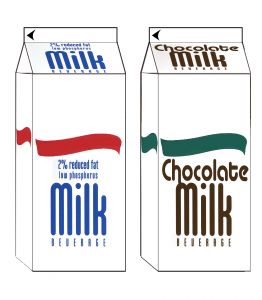 Flavored milk has become the front line for a food fight of epic proportion. With the help of Jamie Oliver’s Food Revolution, attention has been brought upon the allowance of flavored milk in schools.
During his most recent episode, which aired April 12, Oliver was outraged by the chocolate milk L.A. Unified School District (LAUSD) serves their students, suggesting the added sugar in chocolate milk is a major contributor to diet-related diseases affecting U.S. children. After much debate from administrators, health professionals, parents, and media personalities, the question remains, should flavored milk be eliminated from schools?
MILK: A NUTRIENT-RICH FOOD
Both the Dietary Guidelines and MyPyramid emphasize the importance of choosing nutrient-rich foods. Nutrient-rich foods provide the most vitamins, minerals, and other nutrients with relatively few calories. Milk—whether it’s white, chocolate or strawberry—is considered nutrient-rich because it is packed with nine essential nutrients that are important for kids’ health. These nutrients include calcium, potassium, vitamin D and protein, which help build healthy bodies and strong bones in growing children.
A decline in milk consumption, flavored or plain, may have serious, long-term effects on bone health of today’s youth. Milk’s nutrient-rich package is difficult to find in other foods that are as affordable or appealing.
WHAT SCIENCE SAYS
Recent studies have shown that children who drink flavored milk actually drink more milk overall and have better quality diets (more calcium, vitamin D and potassium- nutrients many kids don’t get enough of). Additionally, children who consume milk of any variety tend to consume fewer sweetened beverages and more often maintain a healthy body weight.
Maintaining a healthy body weight is especially important for decreasing the risk of obesity and type 2 diabetes. Banning flavored milk could have the opposite affect-placing children and adolescents at risk for nutrient deficiencies and weight gain.
NATURAL VS. ADDED SUGAR
There are two types of sugars found in flavored milk: natural sugar (lactose, found in all milk) and added sugar (usually high-fructose corn syrup). Although eating too much of any food will lead to weight gain, the amount of high-fructose corn syrup in flavored milk is much lower than amounts found in typical soda beverages and sweetened fruit drinks.
One cup of flavored milk usually contains two to four teaspoons of added sugar; sodas and fruit drinks contain up to nine teaspoons of added sugar. These extra calories from sugars in flavored milk are small relative to the amount of essential nutrients children receive.
BENEFITS OUTWEIGH RISKS
Recognizing that many schools want to improve the nutritional quality of their menu, the dairy industry has taken immediate action to reduce fat, calories and added sugars in flavored milk. Today, the majority of milk in schools is low-fat or fat-free and the majority of flavored milk is at or below 150 calories per serving.
Rather than eliminating or banning foods from school meals, decision makers should be focused on providing nutrient-rich foods, like flavored milk, to ensure children get the nutrition they need to perform their best. Besides, nutrition is not nutrition unless a child consumes it. And from what we’ve learned, students are drinking flavored milk.

References
1. “Flavored Milk.” Dairy Council of California. Dairy Council of California, 12 April 2011. Web. 19 April 2011. < http://dairycouncilofca.org/Milk-Dairy/MilkFlavor.aspx>. Johnson, Rachel K., Carol Frary, and Min Qi Wang.
2. “The nutritional consequences of flavored-milk consumption by school-aged children and adolescents in the United States.” Journal of the American Dietetic Association. 102.6 (June 2002): 853-856.
[NL] Welcomes New Contributor: Katie Caputo, RD

Growing up in an Italian family, I had the privilege to create many special memories with family and friends around the dining room table. Whenever I am asked why I chose dietetics as my major, I can’t help but go back to these childhood memories that shaped my career decision.
My college career began at Michigan State University (MSU) in August of 2004. While attending MSU, I developed a strong, well-rounded background in nutritional health. After earning my Bachelor’s degree in dietetics, I began the dual Public Health Nutrition Master’s degree program and dietetic internship at Case Western Reserve University in August of 2008. At CWRU, I studied and practiced the core functions of Public Health nutrition. I was able to increase my awareness of the essential services Public Health nutritionists provide as well as to prepare myself to practice professionally in the field.
As a nutrition professional, I find it crucial to stay up to date with trends and claims presented by the media. When it comes to research on nutrition and health, media reports are often responsible for much of the frustration the public feels toward the health community. With emphasis on short, “newsworthy” pieces, these reports often convey the results of single studies, and many stories are chosen because the results run contrary to current health recommendations.
Trust in nutrition information comes from presenting information from credible sources, and from communicating these in ways which the general population will understand. Science and technology are modernizing the field of nutrition and are consequently increasing its complexity.
Therefore, as a credible health professional, I am thrilled at the opportunity to provide [NL] readers with current information regarding the field of nutrition and the impact advances in medical science have on the discipline.

Add Dukan to the Long Lists of Fad Diets

A diet that promises to shed pounds quickly without horrible hunger pains or calorie counting AND it can help manage weight for a lifetime—where have I heard these claims before? When I think about it, some names like Atkins and South Beach come to mind. Now you can add one more to the list with the Dukan Diet, a high-protein and low-carbohydrate diet with a French twist.
Created by Dr. Pierre Dukan, the diet has been making headlines and best-seller lists overseas for some time and now it’s making its way to the United States. But it hasn’t come without plenty of critics who say the diet is restrictive, tough on the kidneys (due to the high amount of protein), lacking nutritional balance, expensive, and ultimately unsustainable. From personal research, I’d have to agree with most, if not all of these arguments.
When any fad diet makes its way into the market and on book shelves I like to ask myself two things:
- If I chose to go on this diet, is it unlikely I could follow the regimen for more than a year? Two years? For life?
- Does it restrict any particular food groups I enjoy?
If the answer is “yes” to either question, or both, that raises a red flag and I consider that particular diet a fad that wouldn’t be worth trying.
Take a look at a short summary of the four phases of the Dukan Diet regimen and see if you come to a similar conclusion.
Phase 1: Attack Phase
During this phase dieters are only allowed to eat protein foods. Unlike the Atkins Diet, however, these protein sources must be lean cuts lower in fat.
Phase 2: Cruise Phase
In this phase meals alternate between lean protein only and lean protein with non-starchy vegetables.
Phase 3: Consolidation Phase
At this point, meals are still protein-based but once you reach your weight loss goals you can incorporate a serving of fruit, two slices of whole-grain bread each day and an extra serving of carbohydrates each week.
Phase 4: Stabilization Phase
One day of the week you are instructed to eat only protein and the rest of the week you are allowed to eat foods that fit into phase 2 of the program (more protein and some vegetables).
DUKAN MORE LIKE DU-KAN’T
Seem doable? I certainly know I couldn’t manage it and I wouldn’t want to, either. Common side effects of a high-protein diet and little else include fatigue, headache, constipation, bad breath, and constipation. That doesn’t sound enjoyable to me, which is exactly what food should be beyond general nourishment.
No surprise to most, a well-balanced diet rich in fruits, vegetables, whole-grains, lean protein and low fat dairy coupled with regular physical activity are still the best solutions to losing weight and keeping it off long term. True, the weight may not come off as quickly but over time a healthier diet and an increase in physical activity will lead to steady weight loss that can last a lifetime.

Nutrition Lately is Now Part of the Nutrition Blog Network

Nutrition Lately is excited to now be part of the Nutrition Blog Network. We are so privileged to be a part of this wonderful community who strive for the very things we do here at [NL]: sound and credible nutrition information, for YOU.
Wondering just what this blog network is all about? As the Nutrition Blog Network states, “The Nutrition Blog Network is a collection of blogs written by registered dietitians. It’s a site you can turn to for trusted advice from nutrition experts.”
Want to know more? Be sure to check out their site and look at their Nutrition Blog Directory for other great nutrition blogs and reliable nutrition information. You can also follow them on Twitter, @NutritionBlogs, for daily tweets on all things nutrition.


A short while back I made a trip to Chicago and had the opportunity to take part in a live competitive cooking show: Kenmore Live Studio’s Cooking Combat. As a guest judge, I had the pleasure of eating some delicious food and mingling with the great people at Kenmore. This particular show pitted two teams from the Chicago Cooking Chicks against one another to see who could make the best St. Patty’s Day themed treats.
Posted below are a couple of clips, so be sure to check out some highlights from the show. For more on the show, Kenmore Live Studio, and the recipes used that night (awesome mini-cupcakes and chocolate soufflés) visit Kenmore’s Facebook fan page or check them out on Youtube.
After eating and critiquing some great tasting treats, the other guest judges and I tallied our scores and picked a winner. View the clip below to see which team won!

[NL] Limelight is Here!

In case you didn’t know, a new feature has been added to the Nutrition Lately blog: [NL] Limelight. Nutrition Lately Limelight is a monthly featured post highlighting notable nutrition related work by a RD, dietetic intern, student or volunteer within their community. These posts proudly offer professional information, commentary, and thoughts from featured individuals regarding today’s nutrition profession.
As a way to promote the terrific work being done by RDs, dietetic interns, and dietetic students, I’m excited to offer you this featured post which will be available all month long under the [NL] Limelight tab. I hope you enjoy this personal look into the field of nutrition. Be sure to check in every month to see a new featured individual.
Our first RD in the limelight is Ms. Robin Plotkin from Dallas, Texas. I was lucky enough to gather some information from her as well as ask her a few questions about her life as a RD, the future of nutrition, and her best advice for those aspiring to be successful dietitians. For more on Robin as well as her insightful answers check out the featured post here.
My thanks to Ms. Robin Plotkin for taking the time to let us know about the wonderful work she is doing.




 Nutrition Lately