[NL]’s Guest Post on Eating The Week

Recently, I was honored with the opportunity to guest for Kat Lynch of Eating The Week. The topic? Cooking/kitchen skills and how they can help you better understand the food you eat! It’s a terrific theme because it’s SO true.
Once you roll up your sleeves and play chef you really start to gain an appreciation for the chemistry, taste, textures, and smells of the food you prepare. And that appreciation can help lead to healthier ingredient choices, healthier meals, and ultimately healthier individuals. So head on over to eatingtheweek.com and check out my guest post as well as all the other great posts and “week-size morsels” available there.
Thanks again Kat for the guest post spot, I was happy and honored to contribute to such a GREAT blog!
MyPlate Week, Day 5: A Veggie Venture

The final day of [NL]’s “MyPlate Week” is devoted to the vegetable group. Mom always made you finish your vegetables at the dinner table and you should be glad she did! Eating vegetables provides us with numerous health benefits and have been linked to reduced risk of chronic disease. Not only that, but contrary to popular thought, vegetables CAN taste 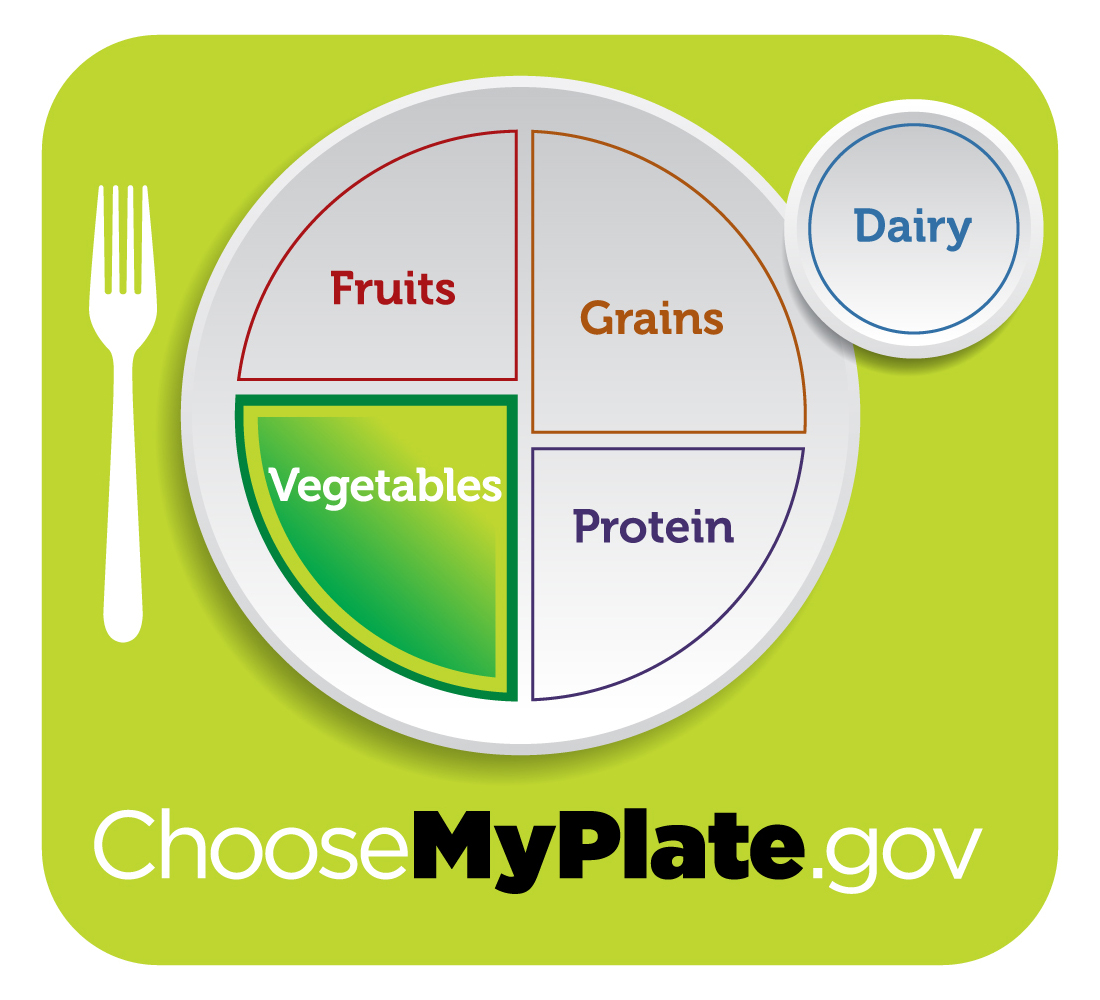 good. Below are some reasons why vegetables are an important element of your everyday plate.
HEALTH BENEFITS
Eating a vegetable-rich diet may help to reduce the risk of cardiovascular disease, type 2 diabetes, stroke, obesity, and some cancers. Because they are often high in potassium, they may serve to help lower blood pressure as well as reduce the risk of developing kidney stones. Additionally, vegetables are lower in calories than other high-calorie foods, which are known as nutrient density, and they can be helpful in lowering calorie intake for weight loss.
VEGGIE VERNACULAR
We love fruits and veggies so much that we’ve developed a veggie vernacular to help you remember why it’s important to keep them included on every plate. Keep these phrases in mind when choosing, storing, preparing, and enjoying your vegetables:
- Be Bright: The brighter orange and red vegetables are packed with antioxidants and include acorn squash, carrots, red peppers, sweet potatoes, and tomatoes.
- Freezing Frenzy: Stock up on frozen vegetables for quick and easy cooking in the microwave.
- Go Green: Dark green vegetables are delicious and often filled with folate and iron. Enjoy broccoli, collard greens, mustard greens, spinach, and turnip greens.
- Properly Plan: Plan meals around vegetables such as stir-fry or soup. Then add other foods to complement the veggies.
- Seasonal Sense: Buy fresh vegetables in season because they cost less and are likely to be at their peak flavor
- Savor the Starches: Vegetables in the “starch” group can be nutritious and filling and include corn, green peas, lima beans, potatoes, water chestnuts and cassava.
- Vary Veggies: Keep you vegetables varied by including different colors, shapes and sizes for each meal. Have fun with it.
CHILDREN AND VEGGIES
It’s not always easy to get children to eat their vegetables as they often leave a more bitter taste in the mouth. Here are some simple tips to make veggies fun for the kids:
- Allow children to decide on the dinner vegetables or what veggies will be put in the dinner salad
- If age permits, allow children to help clean, peel, or cut up the vegetables
- Try a new veggie every week and ask your child to pick it out for the family
- Make an afternoon snack cut-up vegetables
- Because children often prefer foods separately, try separating two vegetables rather than mixing together.
Remember to always set a good example when eating vegetables with your kids!
For more info on fruits and all of the other food groups represented on MyPlate, check out choosemyplate.gov.

MyPlate Week, Day 4: A Fruitful Force

Day four of “MyPlate” week is dedicated to the fruits portion of the plate. Most fruits provide a sweet flavor that can be a nutritious and lower calorie substitute for traditional sweets and desserts. Below is some insight on why fruit is a 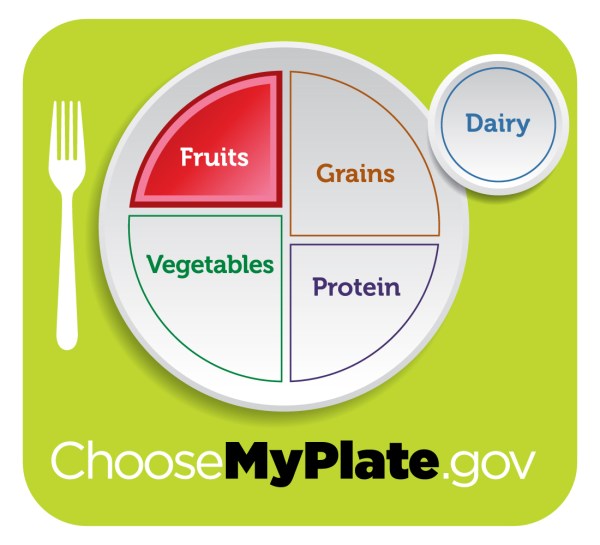 nutritious and delicious addition to your plate.
A FRUITFUL FIGHTING FORCE
Fruits pack a serious punch when it comes to health protection. Among fruit’s repertoire are essential vitamins, mineral, and fiber that can help protect your body against diseases. Diets high in fruit have been linked to decreased risk of diseases such as stroke, cardiovascular diseases, and certain cancers. Here are a few reasons why fruits help protect our bodies:
- Potassium Rich: Some fruits are rich in potassium which may help you to maintain a healthy blood pressure. Sources of high potassium fruits are oranges, cantaloupe, apricots, dried peaches, prunes and prune juice and honeydew melon
- Fiber-filled: Fiber is important for blood cholesterol and digestive health. Fiber filled fruits include apples, prunes, and figs, to name a few.
- High-C: Many fruits are packed with vitamin C, which is important for growth and repair of all body tissues, helps to heal wounds, and keeps our dental health in check.
MAKE IT A QUARTER
The Dietary Guidelines recommend making half of your plate fruits and vegetables. Therefore, a whopping ¼ of the plate should be devoted to fruits alone. For those of you who may find it a challenge to get your fruits in, here are some suggestions to fill each meal’s plate with fruity goodness:
- Breakfast: Add strawberries, blueberries, or bananas to your waffles, cereal, oatmeal or toast. Ever have a peanut butter and banana slice sandwich? That counts, too!
- Lunch: Adding some chopped apples, pears, or raisins to a salad is a delicious way to incorporate fruit while feeding that sweet tooth.
- Dinner: Make your fruit a dessert! Cut up watermelon, pineapple or strawberries and top with a tablespoon of light whipped topping
SERVIN’ EM’ UP!
It is not uncommon for people to be confused about what counts as a “serving” of fruits so here is a quick-and-dirty reference guide with one-serving examples:
- 1 small apple
- 1 small banana
- 16 grapes
- 1 large plum
- 4 large strawberries
- 1 small wedge of watermelon
- ½ medium grapefruit
For more info on fruits and all of the other food groups represented on MyPlate, check out choosemyplate.gov.

MyPlate Week, Day 3: Delicious Dairy

Today [NL] is talking about the portion of the new MyPlate labeled “Dairy”. This particular food group is especially appropriate to be blogging about because in addition to being represented on the new USDA food icon MyPlate, it is also 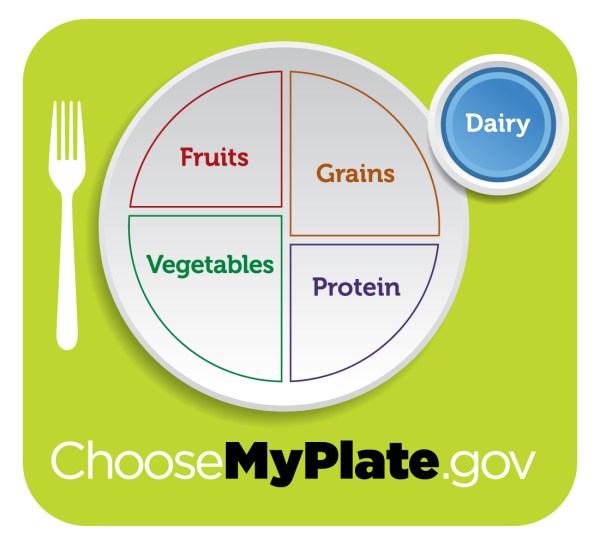 National Dairy Month in June.
And to celebrate this month’s ‘30 Days of Dairy’ as part of National Dairy Month [NL] is taking part in a blog carnival, hosted by National Dairy Council and you can see a list of those participating in the carnival at the bottom of this post or find the full list here.
Now let’s take a look at some of the reasons why dairy deserves to be celebrated and represented on the new USDA food icon, MyPlate.
HEALTH BENEFITS
Dairy is simply full of nutrients and offers many health benefits, the most prominent being a boost in bone health which is particularly important to young children who are growing and building bone mass. Consumption of dairy products has been shown to improve bone health and studies have also linked regular consumption of dairy to a reduced risk of bone disease like osteoporosis. But that’s not all, regular dairy intake has also been linked to:
- Reduced risk of cardiovascular disease
- Reduced risk of type 2 diabetes
- Lower blood pressure in adults
What are the nutrients responsible for these health benefits? Some of the key nutrients include calcium, potassium, vitamin D, and protein. All of these play vital roles in the body including maintaining bone health and helping to build and repair the body’s tissues.
WHAT FOODS ARE CONSIDERED DAIRY PRODUCTS?
When one thinks of dairy products the first food that probably comes to mind is milk, but there are other great options to choose from. And remember, to get the most out of your dairy consumption, choose fat-free or low-fat dairy options when possible. Here are some other great dairy options:
- Yogurt (fat-free, low-fat, reduced fat, Greek, frozen yogurt, etc.)
- Cheese (American, Swiss, cottage cheese, mozzarella, etc.)
- Calcium fortified soymilk
HOW MUCH SHOULD I EAT?
For most, the recommended amount of dairy each day is about 3 cups. Here are some helpful tips to help you achieve the recommended daily amount:
- Include milk or soymilk as a beverage at meals
- Make yogurt-fruit smoothies to help you reach both your dairy AND fruit daily recommendations
- Try low-fat yogurt or pudding for a snack or dessert
WANT MORE?
To learn more about MyPlate and each of the food groups on the icon, check out choosemyplate.gov. For more on the “dairy” food group and National Dairy Month, visit nationaldairycouncil.org and check out their blog carnival dedicated to celebrating dairy.

MyPlate Week, Day 2: The Goodness of Grains

Day 2 of “MyPlate Week” brings us to the “Grains” portion of the plate. Like the other food groups represented on the new food icon grains can provide vital nutrients and many health benefits. Below is a basic breakdown of what this portion of 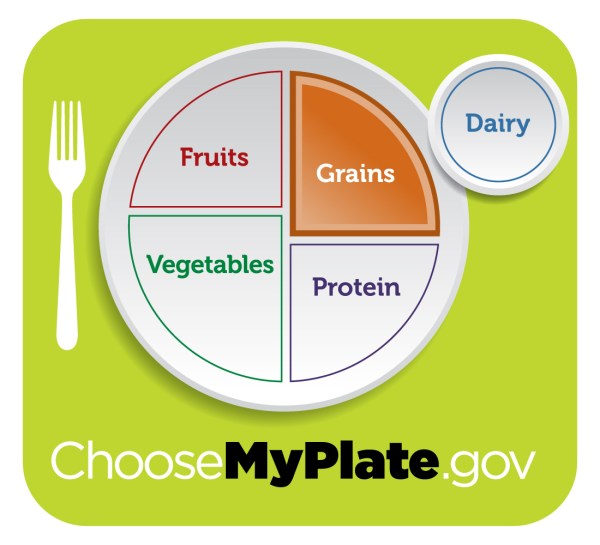 the plate has to offer.
HEALTH BENEFITS
Studies have shown that grains, particularly whole grains, have been linked to a reduced risk of heart disease. Why? Fiber is one reason. The fiber found in whole grains can aid in lowering cholesterol, but that’s not all fiber can do. Some of the other health benefits linked to a high-fiber diet include:
- Reduced risk of type 2 diabetes and obesity
- Aids with weight management
- Reduced risk of constipation and bowel issues such as diverticulosis
PACKED WITH NUTRIENTS
Besides fiber, grains are a main source of many nutrients including folate and other B vitamins (thiamin, riboflavin, niacin) as well as minerals like iron, magnesium and selenium. These vitamins and minerals play an important role in many of the body’s functions such as aiding in metabolism, forming red blood cells, carrying oxygen to in the blood, and even helping to build healthy bones.
WHAT’S CONSIDERED A WHOLE GRAIN?
As mentioned before, it’s the WHOLE grains, not refined grains that carry the most health benefits and it’s important to try and make half your daily servings of grains whole. These whole grains have not been milled or processed in a way that strips the bran and germ portion of the grains, which contain many nutrients. Great whole grain options include:
- Whole wheat bread
- Popcorn
- Oatmeal
- Brown rice
- Quinoa
HOW TO EAT MORE WHOLE GRAINS
Eating more whole grains isn’t difficult. Simply substitute in some whole grains options where you would typically use a refined product to get all the benefits whole grains have to offer. Here are just a few of the many ways you can incorporate whole grains into your diet:
- Using whole wheat or rye bread for sandwiches
- Adding whole grain flour or oatmeal when making baked goods like cookies
- Try a whole grain cereal for breakfast
- Use whole wheat noodles for pasta dishes
DON’T BE FOOLED
Be sure to look for the words “whole grain” on the ingredients list when looking for whole grain options at the grocery store. Words like “multi-grain,” “100% wheat,” or “seven grain” are typically NOT whole grain products.
For more info on grains and all of the other food groups represented on MyPlate, check out choosemyplate.gov.

MyPlate Week, Day 1: The Power of Protein

What was once a category called “Meat and Beans” in past Food Pyramids is now simply “Proteins” on MyPlate, broadening the protein category to a variety of other food sources. This protein food group includes all foods made from meat, poultry, seafood, beans and peas, eggs, soy, nuts, and seeds. Furthermore, the recommendation states all meat and 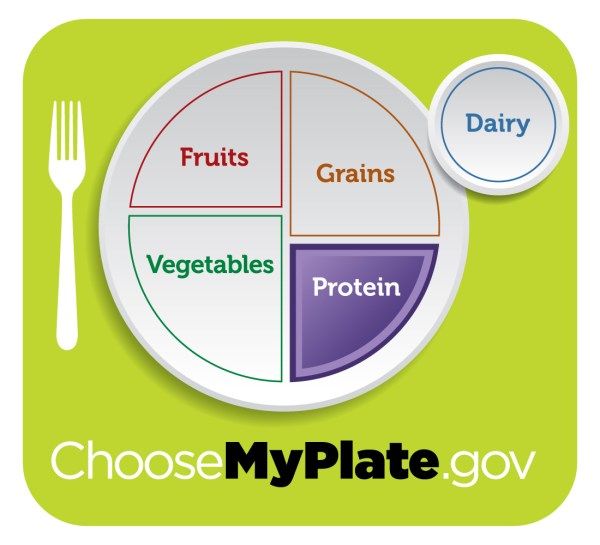 poultry choices should be lean or low-fat.
With an assortment of protein food sources available, we can utilize the MyPlate tool effectively to enjoy a healthy variety of protein food sources AND meet our protein needs with each and every meal.
WHY PROTEIN IS IMPORTANT TO YOU HEALTH
Protein plays many roles that support many of our body’s functions. Proteins are part of all our body’s tissues, including muscles, organs and bones. They make up the hormones and enzymes that regulate body processes and can even serve as an energy source. It’s important that we eat enough protein daily (typically 5-7 ounces) to support growth and maintenance of tissues, and to replace protein that is broken down by the body.
WHERE’S THE BEEF?
Calorie-for-calorie, lean beef is one of the most nutrient-rich foods to fuel an active and healthy lifestyle. A 3-ounce serving of lean beef provides on average 150 calories, and is an excellent source of protein, zinc, vitamin B12, selenium and phosphorus; and a good source of choline, niacin, vitamin B6, iron and riboflavin. There are more than 29 cuts of beef that meet government guidelines for lean including summer grilling favorites like the Sirloin, Tenderloin, T-Bone steak and 95 percent lean Ground Beef. With more than 29 lean cuts—easily complementing vegetables, fruits, grains and dairy— lean beef can improve the taste and satisfaction of a meal while maximizing the nutrients consumed to keep a healthy body. Having a summer grilling party? Have every guest bring a side, and you supply the BEEF- many of the 29 lean cuts are crowd pleasers.
BEYOND MEAT AND BEANS
There are so many great protein options outside of meat and beans. Nuts, such as almonds for example, are excellent alternatives for individuals who prefer non-meat sources. Whole almonds are a naturally high source of vitamin E, calcium, magnesium and potassium. Additionally, a one-ounce serving (about 23 almonds) provides 3.5 grams of fiber, 9 grams monounsaturated fats, and 6 grams of protein.
A few simple ingredient substitutions make it easy to incorporate almonds into everyday recipes. Try making “nut crumbs” by coarsely grinding almonds in a food processor. Use them as a wholesome gratin topping for casseroles, or sprinkle on pasta and rice dishes.
Instead of peanut butter, almond butter is a nutritious and hearty topping for bagels or as a sandwich spread and it’s easy to make at home. Just chop whole natural almonds in a food processor and blend with a little vegetable oil and salt and until almost smooth.
Disclosure: Katie is an employee of the California Beef Council.

References
- “Beef Nutrition Newsroom.” BEEFnutrition.org. The Beef Checkoff Program. Web. 3 June 2011. <http://www.beefnutrition.org/newsroom.aspx>.
- “Health Professionals.” California Almonds. Almond Board of California, 2010. Web. 3 June 2011.<http://www.almondboard.com/HealthProfessionals/Pages/Default.aspx>.
June 6th Starts [NL]’s ‘MyPlate Week’

Last Thursday, the USDA unveiled the new federal food icon known as MyPlate and despite some criticism, most health experts ackowledge it’s a step in the right direction.
 Love it or hate it, MyPlate is here to stay (at least for awhile). So instead of smashing the new MyPlate to pieces and disregarding it before you even have a chance to eat off it, let’s take this opportunity to embrace the new icon, focus on its positive attributes (there are actually quite a few) and demonstrate how it can help American’s develop healthier food choices and eating habits.
That’s why Nutrition Lately has dedicated the week of June 6th “MyPlate Week” as a way to inform and demonstrate the messages behind the new food icon.
Beginning Monday, June 6th [NL] will provide a new post that will dissect each of the 5 sections of MyPlate, one section per day until Friday the 10th. Each day we will provide a basic rundown of one section including the health benefits of the food group, foods that fall into each category, and how you can incorporate them in to everyday meals.
So be sure to check out Nutrition Lately again on Monday to see the first day of “MyPlate Week” and come back the following days to see a complete rundown of the new USDA food icon, MyPlate!

Today, the USDA announced it will be using a new image, appropriately named MyPlate, to replace the Food Pyramid in its efforts to help American’s eat healthier, more balanced meals.
THE LOOK
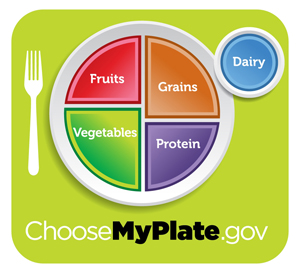 With its simple design and color scheme that designate the different food groups and proper portions for meals it certainly is a more straightforward visual display when compared to the complex food pyramid’s of the past that contained multiple layers, 3D images, steps, and even provided a key to designate what certain symbols were within the pyramid itself.
THE CONCEPT
The concepts behind the new icon is broken up into 3 messages:
- Balancing Calories
- Foods to Increase
- Foods to Reduce
To balance calories the USDA offers strategies like avoiding oversized portions and “enjoying your food, but eating less.”
Foods to increase include fruits, veggies, whole grains, and low-fat dairy.
Foods to decrease include high sodium and high sugar foods like soda.
THE BOTTOM LINE
Ultimately, MyPlate was put in to place to provide a clearer picture of what a healthy meal should look like and to be utilized as a launch point for long-term positive dietary change. But will it? I think it certainly could. It really depends on how health professionals approach the new icon and how the general public receive the fact that there is yet another new national model for healthier eating.
YOUR THOUGHTS ON MYPLATE
Love it? Hate it? What are your thoughts on the new icon? Do you think it will change the eating habits of American’s? Please leave a comment and let us know! You can also tweet your comments on twitter under the hashtag #MyPlate, #FoodIcon, or #NLchat and let us here at Nutrition Lately know what you think.

Well, another month has passed and that means a new person will be featured in [NL] Limelight, Nutrition Lately’s special featured post on individuals in the field of nutrition. But before you check out June’s RD in the Limelight, be sure to take a look at last months featured person below!
May’s [NL] Limelight…Kat Lynch of Eating the Week

ABOUT KAT
Kat Lynch is a RD-to-be who will be starting an MS/CPD program this September at Framingham State University in Massachusetts. For more than a decade, Kat has worked in pharmaceutical market research and competitive intelligence for industry-leading companies like market intelligence vendor Decision Resources and biotech company Genzyme. Kat became increasingly interested in a more direct impact on patients’ health and wellbeing, and followed her interest in nutrition toward a new career.
Kat’s blog, Eating The Week, sprang from the intersection of this new career and her longstanding recipe-swapping with friends and family. With so many opinions on what you shouldn’t eat, Kat decided to focus on what we should eat and how to prepare those things in tasty, approachable recipes. Eating The Week tackles a food or nutrition topic each week, and features 5-7 recipes on that theme. Kat has found the blog is a great way to explore and demonstrate how nutritional science meets the stuff on our plates!
Spreading the word about Eating The Week also has helped Kat support one of her volunteer interests: the North Reading Food Pantry. Kat works the pantry several times a month, and saw how monetary contributions help address the immediate issue of food scarcity in her suburban community. Kat featured a contest to drive new readers to the blog, and in return, donated $1 for every new follower to the food pantry. The $40 raised in this effort is just the beginning, as Kat plans to repeat the contest in the future.
Even as a new kid on the block, Kat has been featured by several more-seasoned nutrition blogs. Kat is a Recipe Guru in thePlate community and she recently authored a guest post for The Healthy Apron, which will be posted May 5th, featuring simple ways to track your diet and achieve a balance of food in and energy out that matches your weight goals.
Kat is Head Nutritionist and Meal Planner at Lynch, Inc., whose members include her husband and their smart, sassy 4 ½ year-old Miles. She is also an avid runner, taking on her first ½-marathon at the beginning of this month. The challenges of work, family, fitness and everything else has taught Kat about how difficult “balance” can be for anyone, and will definitely inform her work with nutrition clients who are facing the same endless priority list!
THE INTERVIEW
What made you decide to switch career tracks and work towards becoming a RD?
My 13-ish years working in the pharmaceutical industry has been great – I’ve learned things across a spectrum that includes biochemistry, manufacturing, regulatory policy, customer management, data analytics and medical anthropology. But I want to remove some of the “layers” in between the work that I do and the people/patients who could benefit from it. I wanted to move into a more clinical role; and to build on my public health training, I wanted my work to help address some of the greatest needs for the most people (bang for the buck, as it were).
I initially considered nursing, to become a nurse practitioner and help fill the growing need for skilled primary-care practitioners. But through the pre-requisite coursework for nursing programs, I found I was enthralled with nutrition – the science, the sociology, and the potential to benefit a lot of people’s health. So I applied to several MS/RD programs and will start on my way at Framingham State in Massachusetts this September!
There are so many avenues you can travel down as a dietitian today. Where do you see yourself focusing your future expertise?
Right now, my focus is clinical clinical clinical! I can’t wait for my first medical nutrition therapy course. I’m drawn to specializing in a therapeutic area like diabetes, inherited metabolic disorders, oncology, or others. From my current line of work, I have a good deal of experience in renal disease and I could easily see myself happily working as a renal dietitian. That said, there are so many avenues to explore, and who knows what else I might discover a passion for?
From reading your “About” section on your blog, eatingtheweek.com, you mention that you use your blog in part for research and learning. What have you learned so far working in the nutrition blogosphere?
This one’s hard – it’s been a mere 4 months but I feel like I’ve learned too much to describe in just a few short sentences! Probably two things have been the greatest lessons learned so far: nutrition nerds are incredibly social, in the digital sense; and the hidden agenda of Eating The Week.
On RDs and social media…
I’ve been amazed by how active dietitians are in social media, from blogs to twitter to webinars to Facebook to… you get the idea! I shouldn’t have been surprised, because everyone told me how passionate dietitians are about their work. Social media is a logical tool for them.
On Eating The Week’s agenda…
I’ve learned how my blog’s audience responds to different material. Some science-y nutrient-nerd posts that I just find FASCINATING were received to the sound of crickets, while the food-centric and life-anecdote posts have been very popular. It taught me that people are less responsive to “Don’t” and “Why,” and eager to hear “Do” and “How.” I’m already thinking about this distinction and how it will be relevant when I’m eventually counseling patients.

Despite what many are led to believe, the relationship between food and weight is really quite simple. Food provides energy measured in calories. A negative calorie balance equates to weight loss. A positive calorie balance without intervention (such as exercise) causes weight gain. Where the REAL problem comes in to play for those trying to lose weight is HOW one goes about achieving a healthy weight loss plan. With what seems to be a new pill, powder, or liquid weight loss product each day, nearly all of them promising to help you shed pounds fast and easily, it’s not a wonder there is confusion.
One weight-loss diet that has sparked my interest as of late (even though it’s been on the market for over a year) is the Ice Cube Diet. It’s simple: You take one “hoodia satiety cube” and mix it with your drink of your choice once daily. The cubes naturally curb your appetite so you will end up snacking less and ultimately, weigh less. Or so they say….
HOODIA
So just what is this hoodia satiety cube? Hoodia, scientific name hoodia gordonii, is a succulent plant that grows in the Kalahari Desert in southern Africa. The plant has been used by the Kalahari Bushmen in the area for many years, supposedly to help prevent hunger on long hunting trips. Researchers believe that a molecule in the hoodia plant, known as P57, may help to lessen appetite. However, there’s no solid evidence from scientifically sound clinical trials that hoodia is an effective tool for weight loss.
RESEARCH
The US Food and Drug Administration (FDA) has issued warnings that no studies exist regarding the effectiveness or safety of hoodia for human consumption. In addition, no studies exist on hoodia’s interactions with medicines and other supplements. Several small, unpublished studies did report optimistic results regarding hoodia’s ability to suppress appetite and, thus, lead to weight loss. Still, most experts agree that not enough conclusive evidence exists in order to recommend hoodia as a weight-loss remedy.
As a registered dietitian, understanding the relationship between diet, lifestyle, genetics, and chronic disease is challenging. Therefore, I rely on the scientific community to shed light on these relationships within research studies. Without the science to back it up, we really do not know if this product is safe or effective.
CONTROVERSY
Some dietary supplement manufacturers market products containing hoodia as a way to suppress appetite and aid in weight loss. Herbal and dietary supplements don’t require approval from the FDA before going on the market. But the FDA has warned some manufacturers of hoodia products to stop making unsubstantiated and misleading claims about weight loss.
Again, no studies regarding the purported link between hoodia and weight loss have appeared in any medical journals to date yet people are still paying up to $40/month for products that may or may not contain any hoodia at all, or work for that matter.
EVERYDAY SOLUTIONS
To avoid buying into another weight loss product, focus on these healthful tips to help you reach your weight loss goals.
- Balance, variety and moderation are an important recipe when you’re choosing foods for health. No, they do not have the flair or popularity of many diet regimens. However, they form a sound foundation for providing your body with the fuel you need.
- Do not rely heavily on nutritional supplements. Supplements do not carry the same benefits beyond providing specific nutrients like whole food choices do such as taste, enjoyment, and social factors. Whole foods in their natural form should be the basis for your healthy, balanced diet.
- Be realistic with your weight loss goals. Make small changes over time in what you eat and the level of activity you do. Remember your needs and goals will be different from your co-workers, friends, and neighbors.
- You don’t have to be a gym rat. All you have to do is get moving. Everything counts, just shoot for 30 minutes each day. Break normal routines and rethink your daily activity.
- Choose your calories by the company they keep. For example, a 3oz. serving of lean beef contributes less than 10 percent of calories to a 2,000-calorie diet, yet it supplies approximately 50% of your daily need for protein, 30% for zinc, and 14% for iron.
There is no quick-fix when it comes to losing weight. Following a diet trend may be harmless, especially if it doesn’t last long. However, following advice or a regimen that is not appropriate to your specific dietary needs can result in harmful consequences to your health. Before adopting any dietary changes, assess the overall impact it will have on your health, particularly in the long-term.

References
Bauer, M.D., Brent A. “Hoodia: Does This Dietary Supplement Help Weight Loss?” Mayoclinic.com. Mayo Clinic, 17 Oct. 2009. Web. 20 May 2011. <http://www.mayoclinic.com/health/hoodia/an01182>.
“Hoodia.” National Institutes of Health, National Center for Complementary and Alternative Medicine. National Institutes of Health, Aug. 2007. Web. 20 May 2011. <http://nccam.nih.gov/health/hoodia/>.




 Nutrition Lately