5 ‘Health Food’ Imposters You Are Probably Eating
Whether it’s misleading marketing tactics or just popular assumption, most foods available to us fall into one of two categories: healthy or unhealthy. Here are five food items that have found their way into the “healthy” category that shouldn’t be there.
1. VITAMIN ENHANCED AND FLAVORED WATER

Yes, it has vitamins but many times it also has tons of artificial flavors and sugar. Don’t let the marketing of these products fool you. The majority if these products are simply glorified sodas.
Healthier Alternative
Make your own flavored water from home by squeezing a hint of lemon, orange, or other fruit juice in your water. It will save you money and will be easier on the waistline.
2. DIET SODA
While most don’t consider this a “healthy” beverage many do consider this drink a lesser of two evils when compared to regular pop. I’ve heard it so many times, “get a diet pop, it’s better for you.” But is it really? Last time I checked carbonated water, artificial sweeteners, caffeine, and food coloring weren’t too good for anyone, whether it’s diet or regular.
Healthier Alternative
Have a glass of 100% fruit juice with no added sugar. Yes, fruit drinks are high in calories due to the sugars naturally found in fruit but at least you can count this towards your daily fruit total and you’ll be getting the vitamins you wouldn’t find in soda.
3. NUTRITION BARS
This one can be tricky and there are several varieties out there that really are nutritious snacks, how ever, many of them are just as high in saturated fat, hydrogenated oils, and calories as some candy bars. My advice would be to check the nutrition label.
Healthy Alternative
Make your own nutrition bar. Contrary to what many think, it can be quick and easy too. Here’s one recipe I found in a matter of minutes online and have used myself.
4. FAT FREE DRESSING
Just because a product is “fat free” does not mean it’s healthy. To make up for lost flavor due to the reduction in fat many dressings have added sugar…and lots of it. This results in a dressing that is loaded with calories. In addition, when paired with a salad this is one instance where some fat is a plus. A little fat can help absorb the fat soluble vitamins A, D, E, and K found in the salad greens.
Healthier Alternative
Stick to an oil based dressing but look for ingredients like vinegar, herbs or olive oil, which is rich in healthier monounsaturated fat.
5. BAKED POTATO CHIPS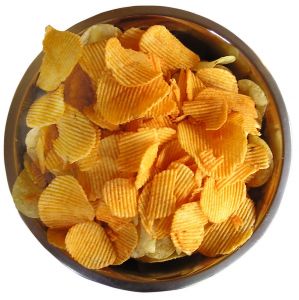
A better alternative to regular potato chips? Yes. A “healthy” food? No. Although they are typically lower in fat and calories, baked potato chips still can be high in sodium and offer little else in the way of nutrition.
Healthier Alternative
Have some popcorn, but be health conscious in its preparation. If it’s drenched in salt and butter it will mostly override any health benefits you may have gained. Instead, air pop it and add some garlic or low fat parmesan cheese. This way you can enjoy a tasty snack that is naturally high in fiber and antioxidants.
BOTTOM LINE
Get in the habit of checking the nutrition facts label on all your grocery items, including the drinks you purchase. This way you can compare products to separate the foods that truly belong in the “healthy” category from those that don’t.
Nutritional Revamp of School Lunches Expected

Although it could take several years to implement the Department of Agriculture has recently planned to change its school lunch nutritional standards for the first time in 15 years. The new guidelines would be aimed at the meals subsidized by the Federal government and would be based on 2009 recommendations by the Institute of Medicine. Highlighted below are some of the major changes.
SALT AND FAT ARE OUT, WHOLE GRAINS, FRUITS AND VEGGIES ARE IN
With the new guidelines school meals would be required to gradually reduce their sodium content to less than half the current amount over a 10-year period. Milk would also be served in only two varieties: low fat or nonfat. More servings of whole grains, fruits and vegetables would also be gradually increased for meals and served daily.
WHAT’S NEXT?

Currently, the proposal only applies to reduced-cost and free school lunches offered to low-income students that are government subsidized but other proposals have been made that could include school vending machines and a la carte items as well.
WHY THE CHANGES?
The aim of the new guidelines for school lunches is an effort to combat the rising problem of childhood obesity in America. According to results from the 2007–2008 National Health and Nutrition Examination Survey (NHANES) an estimated 16.9% of children and adolescents aged 2–19 years are obese; a statistic most would argue demonstrates an obesity epidemic among school-aged adolescents. The hope is that gradual changes such as the ones being implemented on school lunches could aid in lowering obesity rates among children.
WHAT’S YOUR TAKE?
Since this proposal many have argued the government is overstepping its boundaries by regulating what kids can eat at school while others applaud the government for stepping in and trying to create healthier foods in school. What is your opinion? Please leave a comment!
Sports Drinks: Gatorade, Powerade, Propel and…Chocolate Milk?

Yes, you read the title correctly. Chocolate milk is among the list of drinks becoming more and more popular among athletes to rehydrate and refuel after exercise. Why you ask? Simply look at its nutritional profile for the answer.

Chocolate milk provides carbohydrates, protein, calcium, and other trace minerals that all play an important role in refueling after exercise. Carbohydrates are vital in replenishing energy, especially right after a workout when your body needs an energy source to refuel its muscles. The protein helps in recovery providing amino acids which help build and repair damaged muscle due to vigorous exercise. Best of all, it tastes great and is a cheaper alternative to many of the engineered sports beverages available today.
Recent studies support the trend, with one study published in the International Journal of Sports Nutrition and Exercise Metabolism using 2% chocolate milk and another study published in the British Journal of Nutrition using fat-free milk, both of which showed better results for the subjects who received the chocolate milk post-workout versus those who either received water or a commercially available sports drink.
WHAT DO YOU DRINK?
Got a favorite sports drink or other beverage you find effective for rehydrating and refueling after exercise? Tell us about it in the comment section.

Is NuVal the Future of Nutritional Scoring?

Personally, I find comfort in simplicity. Unfortunately, the grocery store is one place I don’t find this comfort too often. Why can’t there be an easier way to determine a healthy product other than analyzing and interpreting the nutrition fact label and ingredient list? It seems as though every product has some nutrition claim: “whole grain”, “9 essential vitamins and minerals”, “great source of calcium”, the list goes on and on. However, these claims can be misleading, confusing, and even in some instances downright false, which can lead to more questions than answers. How can one balance the nutritional benefits of one product against another? Enter the NuVal system.
JUST WHAT IS THE NUVAL SYSTEM?
The NuVal System is a nutritional scoring system that scores the overall nutritional value of individual food items from 1-100, the higher the score the better. Since its development, it has been endorsed by the American College of Preventative Medicine (ACPM), used by large food chains such as Meijer, HyVee, and Price Chopper, and it will soon be implemented into a school district in Missouri. 
THE FORMULA
So how does on come up with a scoring system of 1-100? With an algorithm know as the Overall Nutritional Quality Index (ONQI), that converts nutritional data into a single numerical score. Led by Dr. Katz of Yale University, the formula was developed by an independent team of leading nutrition and medical experts from several universities and health organizations over several years. The formula incorporates more than 30 nutrients to determine a final score. Some of these nutrients include carbohydrates, protein, fat, fiber, vitamins, minerals, and antioxidants. Some specific nutrients that generally reflect a higher score include folate, vitamins A, C, D, and E, and potassium while other foods that are higher in saturated fat, trans fat, sodium, sugar, and cholesterol tend to reflect a lower score. But don’t worry, the ONQI is the only complicated and intricate aspect of the system and luckily it’s only the resulting score you need to worry about and not the actual algorithm itself.
UTILIZING THE NUVAL SYSTEM
While the scores don’t indicate whether a particular food is “healthy” or “unhealthy” the NuVal Scoring System can make it simpler and faster to shop at the grocery store by allowing you to better determine choices based on your nutritional needs. To find out more about products and stores using NuVal visit NuVal’s official website where you can even print a brochure to bring to your favorite store to suggest the use of NuVal near you.

Is Alli Your Best Bet for Weight Loss?

Chances are you’ve probably seen or heard of it. On television. radio, the internet, in retail stores across the country, it’s all over the place. The first and currently, the only Food and Drug Administration (FDA) approved weight loss drug proven to help shed pounds. Sounds great, right? But just what is Alli and is it right for you and your weight loss goals? A breakdown of this drug below let’s you know.
WHAT IS ALLI?
Alli is a weight loss drug that utilizes its main ingredient, orlistat, to help its users lose weight. It’s the first ever over-the-counter weight loss drug approved by the FDA which means their research deems it safe and effective when taken according to label directions. The Alli program also suggests taking the drug while incorporating a reduced-calorie, low-fat diet.
IS IT MEANT FOR YOU?
Customer aim is for overweight individuals (BMI greater than 25) age 18 or older. Although by being an OTC drug anyone over the age of 18 can purchase it. The Alli website warns that like all drugs, there are some individuals who should not take Alli or who should consult with a doctor first.
HOW DOES IT WORK?
Taken at the time of a meal, Alli aids in weight loss by blocking the amount of fat absorbed in the gut, resulting in fewer calories absorbed. This reduction in calorie absorption can lead to a energy deficit, meaning your body is burning more calories than it is consuming which ultimately can lead to weight loss. How does this drug do this? The ingredients in Alli inactivate the enzyme known as lipase, which is one enzyme responsible for the breakdown of fat in the digestive tract. This allows approximately 1/4 of the fat you consume to pass through your digestive tract undigested and out of your body through bowel movements. Of course, the weight loss is not possible if there is not a calorie deficit, which is why diet and exercise is recommended in conjunction with Alli.
WHAT DOES FDA APPROVAL MEAN?
FDA approval of Alli means that this product has been reviewed and deemed safe and effective for consumer use according to the standards held by the FDA and by the products label direction. Surprisingly enough the FDA itself does not conduct drug tests. The role of the FDA is to review studies, research, and findings regarding a specific product to determine the safety and efficacy for consumers. This data is usually submitted by the manufacturers of the product themselves. Of course, this is where many believe there is potential for problems and controversy while others simply believe the FDA simply does not have enough funding to truly oversee all the food, drugs, and other related products adequately.
CONCERNS/CONTROVESY
In the past, Alli had a problem with counterfeit versions of its product being sold online at sites like eBay. While no evidence has been shown that the counterfeit products were sold in retail stores consumers should pay close attention to where they purchase drugs like these. If you do decide to try it, make sure you make your purchase at a reliable source like a recognized retail store.
Other concerns include the side effects of the product. These include gas, upset stomach, oily anal discharge, diarrhea, and frequent and hard-to-control bowel movements. Alli also recommends consuming meals with no more than 15 grams of fat, in order to reduce the severity of these “treatment effects”.
Because Alli blocks some of the fat absorbed in the body, it also can block the absorption of fat-soluble vitamins (vitamins A, D, E, and K). As a result, the use of Alli could increase your chances of fat-soluble vitamin deficiency. Additionally, the fat blocking capabilities in Alli are nondiscriminatory, meaning it blocks a percentage of all fats including heart healthy fats like omega-3s. To prevent nutrient deficiencies if you decide to take Alli, consult with a doctor and consider taking a daily vitamin supplement.
WEIGHING IN
Compared to diet and exercise alone, Alli claims that you can lose an additional 1-2 pounds a week depending on how closely you follow their recommended regimen. Most weight loss also occurs in the first six months of use. Of course, every individual is unique and results can vary. Take in consideration the possible side effects and nutritional deficiencies and it could be a tough choice. My best advice is to do plenty of personal research before trying any product such as Alli, consult a physician and/or a registered dietitian, weigh your options, and make a decision from there.
Have other questions, concerns, or a story to share about Alli? Please feel free to post your comments or email us at nutritionlately@gmail.com.





 Nutrition Lately